

How to Choose the Best Light for Outdoor Family Photos
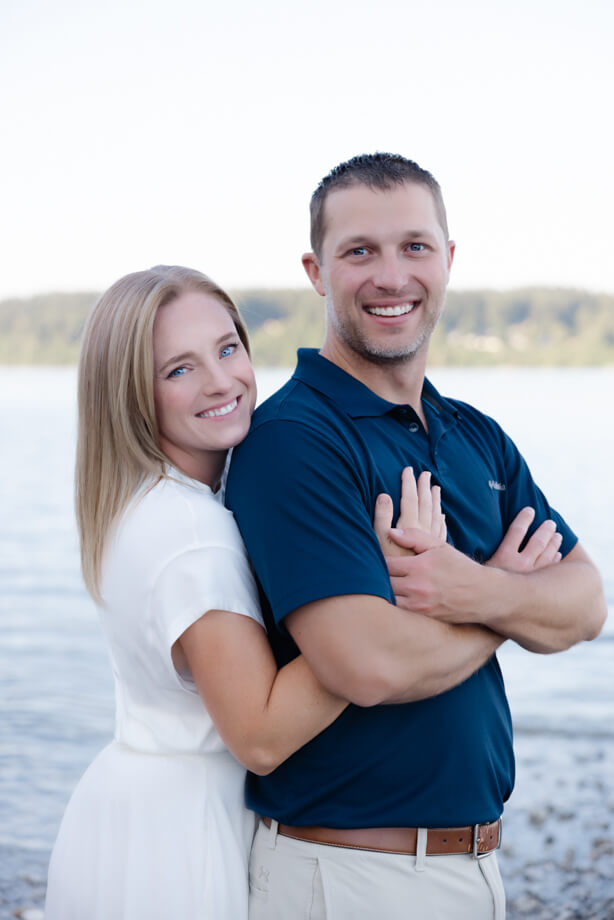
Couple posed during golden hour in “open shade”
One question comes up in almost every session I book: where should we go? Families often have a favorite park, trail, or landmark in mind. And that’s great. But here’s something that matters even more than location. It’s light.
Choosing the best light for outdoor family photos is what actually makes or breaks a session. A beautiful location in the wrong light can lead to disappointing photos. A plain, ordinary spot in the right light can do the opposite. It can produce images you’ll want to print and hang on your wall.
So I wanted to put together a simple guide. Here’s what I look for when it comes to lighting an outdoor session. I’ll also share how you can help pick a location and time that sets us up for success.
Why Light Matters More Than Location
Light affects everything in a photo. It changes whether skin tones look warm and even, or blotchy and harsh. It changes whether you can see detail in the background, or whether it’s washed out to white. It even changes whether everyone is comfortable, or squinting into the sun.
As a photographer, light is honestly a bigger factor in a great photo than the backdrop itself.
Golden Hour: My Favorite Time to Shoot
You’ve probably heard photographers talk about “golden hour.” This is the hour or so after sunrise and before sunset, when the sun sits low in the sky.
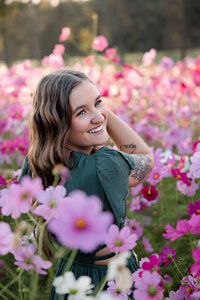
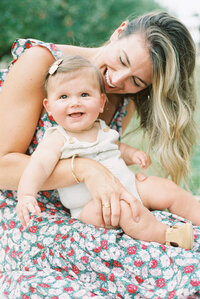
The light during this window is soft, warm, and directional. It wraps gently around faces instead of casting harsh shadows. This is why so many of my outdoor sessions happen in the early morning or evening. It’s not just a preference. It’s what allows the light to do the work for us.
The Trouble with Midday Sun and Bright Backdrops
Here’s a scenario I run into often. A family wants photos in front of the Colorado National Monument. They want the bright red rocks lit up behind them in the middle of the day. It’s an understandable request. That view is stunning.
But there’s a technical hurdle. When the monument is in full, bright sun, you’re often standing in the shade in front of it. My camera then has to choose what to expose for. If it exposes for the bright rocks, your faces end up dark and shadowed. If it exposes for your faces, the rocks behind you often lose their color and detail.
This is why timing matters so much for shots like this one. Early morning or evening light hits landmarks like the monument at an angle. That angle brings out the texture and color in the rock. At the same time, it gives us even, flattering light on your faces.
We can absolutely get you in front of a beautiful view in the middle of the day. But the in-between hours will almost always give us a better result for both you and the background.
Dappled Light: Pretty to the Eye, Tricky for Photos
Another situation I see often is a family choosing a spot with light filtering through tree leaves. It looks lovely to the naked eye. In photos, though, it’s one of the harder situations to work with.
That dappled, spotty light creates bright, blown-out patches and dark shadows scattered across faces and clothing. It shifts as the breeze moves the leaves. In a photo, it reads as distracting and uneven, even though in person it feels magical.
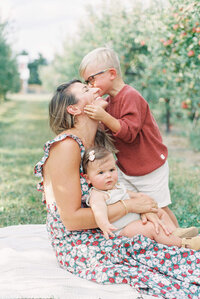
What works better is something photographers call “open shade.” Think of the shadow side of a building, a spot under a dense tree canopy with no gaps, or a softly overcast sky. Open shade gives us soft, even light on your faces. It avoids the harsh spots and shadows that dappled light creates.
Overcast Days Are a Secret Weapon
Cloudy skies get a bad reputation. They shouldn’t.
An overcast sky acts like a giant soft box. Clouds spread the light out evenly and soften shadows. There’s no squinting and no rushing to beat the sunset.
If your session lands on a cloudy day, don’t worry. Some of my best galleries came on a cloudy afternoon.
Studio Light: Full Control, Any Time
Sometimes the best light isn’t outdoors at all. My studio gives me complete control over the lighting. It’s located in the heart of Fruita, Colorado, at 156 South Park Square.
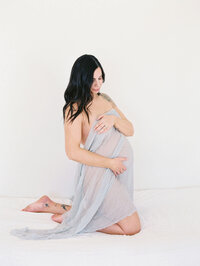
Studio sessions aren’t at the mercy of weather or sunset times. That makes them a great fit for newborns, who need a warm, predictable space. It also means we can book almost any time of day.
Light Changes With the Seasons Here
Western Colorado light shifts a lot through the year. Summer evenings stay bright until almost 9 p.m., while winter sunsets can happen before 5 p.m.
That’s why I plan session times around the season, not just the clock. A 6 p.m. session in July looks completely different from a 6 p.m. session in December.
How You Can Help Pick a Great Spot
If you have a location you love and want to include in your session, here’s how to set it up for success:
- Share the spot with me ahead of time. That way I can plan the best time of day for it, rather than picking the time first and the location second. If the location matters more to you than a specific time of day, let me know that too. It changes how I plan the light.
- Look for areas with even light. Avoid spots with a lot of mixed sun and shade, especially heavy tree cover that lets light through in small gaps.
- Trust my timing suggestions. They may mean an earlier or later session than you first pictured. If I suggest shifting to golden hour, it’s because that’s when the spot will actually look its best in photos, not just to the eye.
- Remember that bright sun isn’t necessary for a great background. Soft, even light lets a landmark’s, like the Colorado National Monument’s, true colors and textures show up beautifully. It often looks better than harsh midday sun does.
Choosing the Best Light for Outdoor Family Photos, Together
My goal is always to help you get photos you’ll love looking back on for years. Location is part of that. But light is what makes or breaks it.
If you have a spot in mind for your next session, send it my way. I’m always happy to figure out the best time and approach to make it work beautifully.
Golden Hour Portrait Sessions | Emily O Photography
Hand Placement in a Photoshoot: A Guide to Natural Portraits
Posing During a Photoshoot: Tips for Flattering Shots